 English
 Indonesia
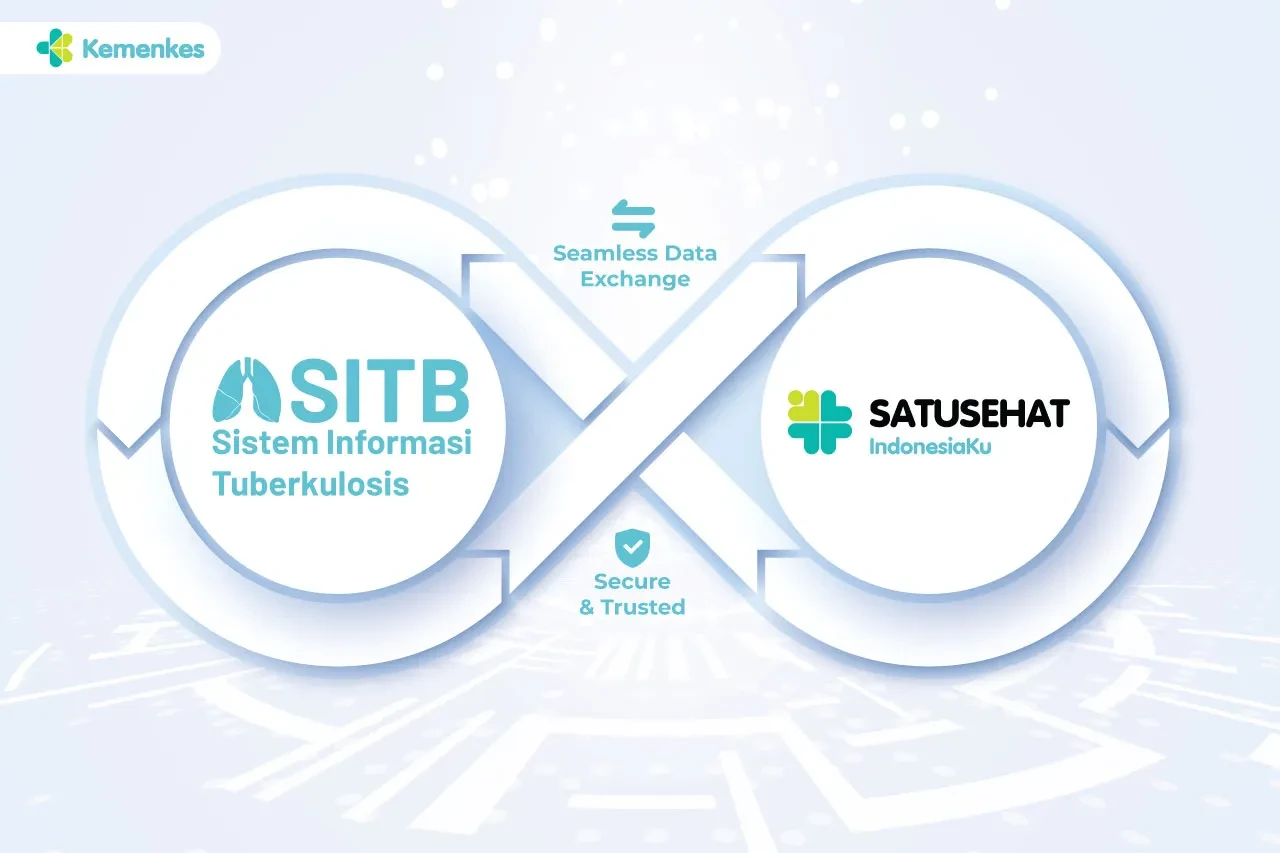
Jakarta, June 15, 2026 - The Ministry of Health (MoH) of the Republic Indonesia, through its Center for Data and Information Technology and Health Technology & Digitalization Transformation Team (Pusdatin-TTDK), has successfully integrated data between SATUSEHAT IndonesiaKu’s Free Health Checkup (SSI CKG) feature and the Tuberculosis Information System (SITB) since April 2026.
This strategic initiative is part of strengthening Indonesia’s national digital health transformation. The integration was implemented to support Tuberculosis (TB) control efforts, as TB remains one of the country’s most significant public health challenges, with an estimated 1.09 million cases annually. Through this integration, continuity of care and the use of health data can be improved, enabling more effective case detection and patient follow-up.
This ecosystem is supported by the successful implementation of the CKG program, which has been rolled out by the government since February 2025. As a massive-scale public health initiative that has now reached more than 100 million citizens as of May 2026, CKG has generated a substantial health screening database, including information on risk factors and symptoms associated with TB.
Dewi Nur Aisyah, Vice Chair of the Primary and Community Health Working Team at TTDK MoH Indonesia, emphasized that this updates is not solely focused on increasing the identification of TB suspects, but also on ensuring continuity of patient care. Previously, CKG screening results and follow-up processes recorded in SITB operated within separate ecosystems, potentially leading to delays in service delivery and duplication of examinations.
“Through this bidirectional integration, data can be utilized by both systems. Active TB patients already recorded in SITB will be automatically identified in the SSI CKG system, eliminating the need for repeat screening. Conversely, TB suspects identified during a CKG screening can be immediately fast-tracked into SITB for rapid clinical follow-up,” Dewi explained.
The alignment process between the two systems began in June 2025 through a series of discussions involving the Directorate of Communicable Diseases of the MoH Indonesia and the World Bank as a development partner. This was followed by an intensive technical development phase lasting four to five months, starting in November 2025.
The integration of SSI CKG and SITB involved several challenges, as both the two systems had been developed separately with different data structures and operational requirements. To address these challenges, the team undertook data harmonization efforts to ensure that information from both systems could be exchanged accurately without disrupting existing operations.
In addition, data security and system reliability were key considerations throughout the integration process. The entire integration was designed in accordance with the security standards applied across the SATUSEHAT ecosystem to ensure that the public's health data remain protected.
The system was also designed to reduce the administrative burden on healthcare workers through the single input principle. By eliminating the need for double data entry, healthcare workflows can be simplified, enabling healthcare workers to dedicate more time and attention to direct patient care.
Stefhanie Chitra, Product Manager at TTDK MoH Indonesia, explained that improved efficiency in case detection is supported by an automated risk assessment mechanism integrated into the CKG screening instrument. By completing questionnaires on symptoms and contact history, the system automatically calculates participants' risk levels to help identify individuals who require further examination.
"If an individual is classified as high-risk, the system will immediately provide recommendations for follow-up diagnostic tests in accordance with established standards, such as AFB smear microscopy (BTA), Rapid Molecular Testing (TCM), NPOC, or chest X-ray examinations. In addition, this integration is designed to function as an early warning system to ensure that TB suspect cases can be followed up promptly," Stefhanie said.
Stefhanie further explained that if a TB suspect case has not completed the recommended follow-up examinations, healthcare workers can conduct follow-up actions using the contact information available in the system. The successful integration of SSI CKG and SITB is expected to serve as both a foundation and a pilot model for the transformation of Indonesia's national digital health ecosystem.
Moving forward, the MoH Indonesia aims to expand the exchange of electronic medical record (EMR) data. This includes the integration of laboratory results, NPOC data, and X-ray findings from SITB into the SATUSEHAT Platform.
In the long term, this data interoperability model will be expanded to integrate promotive and preventive services, priority disease intervention programs, and healthcare financing governance in collaboration with BPJS Kesehatan. The goal is to ensure that clinical and administrative health processes across Indonesia can operate within a unified and interconnected ecosystem.