 English
 Indonesia

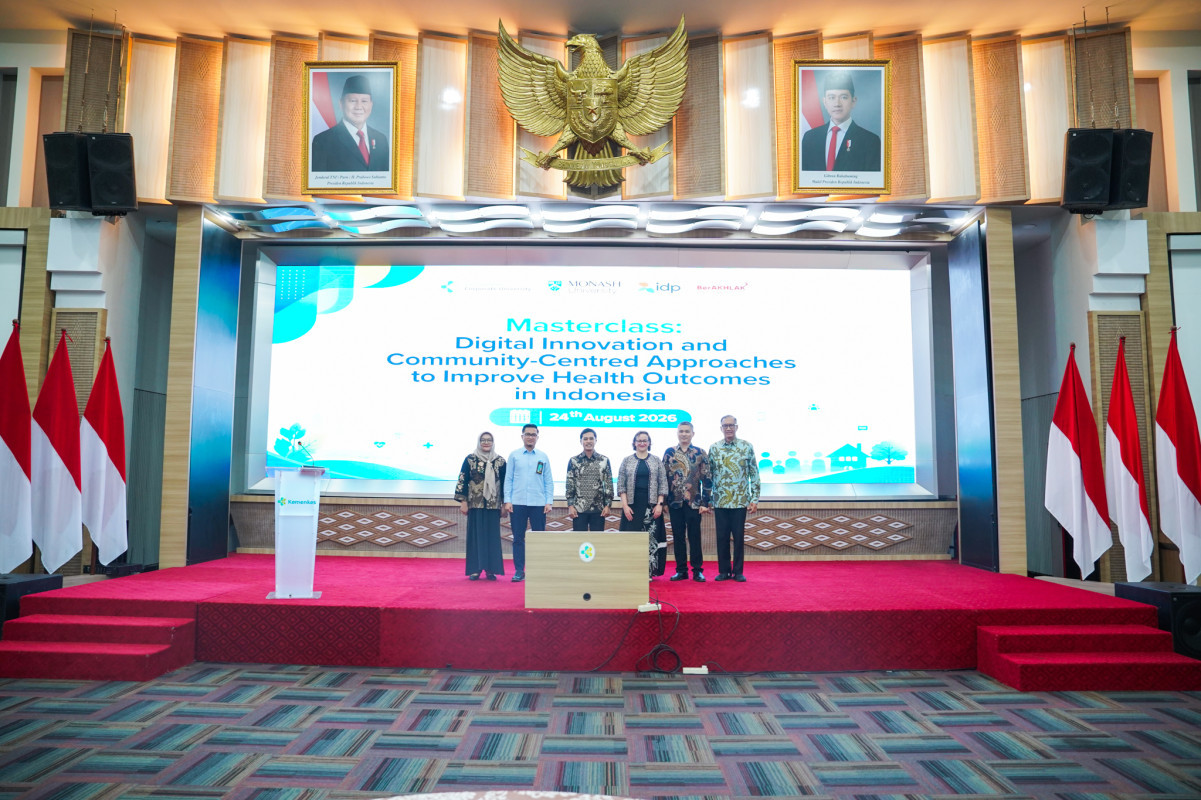
Jakarta, 25 August 2026 – The Ministry of Health (MoH) Indonesia through the Center for Apparatus Competency Development (P2KA), in collaboration with International Development Program (IDP) Education Indonesia and Monash University, hosted a masterclass titled “Digital Innovation and Community-Centred Approaches to Improve Health Outcomes in Indonesia” on 24 August 2026.
This hybrid event, held at Prof. Dr. Sujudi Building of MoH Indonesia, served as a platform for policymakers, healthcare professionals, and academics to discuss digital and community-based healthcare service innovations. Beyond promoting technology utilisation to support the chronic disease management and recovery process, the event also contributed to efforts to enhance the capacity of State Civil Apparatus (ASN) personnel in developing healthcare services that are inclusive, adaptive, and community-centered.
Digital Transformation, Driven by Community Needs
Opening the event, Vice Minister of Health Indonesia, Dante Saksono Harbuwono, emphasized that digital transformation is one of the six key pillars guiding the Indonesian Government’s health policy. According to him, digital innovations must be developed based on actual community needs to deliver sustainable benefits.
“Digital innovation must be built, developed, and nurtured from the real needs of the community itself. Through a community-centred approach, we have the ability to design a healthcare ecosystem that can support patients psychologically in a more sustainable manner,” Dante stated in his keynote speech.
Dante also highlighted that technology should serve as an extension of healthcare workers in reaching out to and supporting patients and their families. This is crucial to achieving health equity, making sure that no citizen is left behind in obtaining their right to healthcare.
Echoing this sentiment, Head of the Data and Technology Center of MoH Indonesia, Eko Sulistijo, highlighted the importance of digital infrastructure support in developing community-based innovations. He noted that community-based approaches require integrated systems and data in order to realize the benefit on a broader scale.
“Innovations born from the grassroots require reliable data infrastructure so their impact can be scaled nationally. Through the SATUSEHAT ecosystem, we strive to make sure that every post-discharge care innovation, patient medical record, and community intervention program can connect seamlessly,” said Eko.
Furthermore, Eko explained that SATUSEHAT serves not only as a health data integration platform, but also as a bridge connecting the formal healthcare system with community-based services, such as puskesmas (community health centers) and posyandu (integrated service posts). Through this integration, healthcare services can be delivered with greater precision, personalization, and sustainability.
Exploring Health Challenges from a Community Perspective
The event proceeded with a masterclass session exploring the application of participatory methods in designing health innovations. The session was led by Prof. Narelle Warren, a medical anthropologist and social science researcher from Monash University, using stroke as the primary case study.
Through co-design methodology, participants were guided to identify various challenges faced by stroke survivors and their families across four key dimensions: trust, access, information, and health systems. From these discussions, participants concluded that stroke recovery challenges extend far beyond clinical care. Suboptimal post-discharge care integration and high long-term care costs present ongoing obstacles for both patients and families.
Consequently, strengthening healthcare services requires more than just adding medical facilities. It demands robust support within the patients' living environments. This approach is expected to help patients and families navigate the recovery process more sustainably.
Through a pile-sorting activity, participants also mapped out the various impacts that can appear after a stroke. Beyond affecting physical health, this condition can disrupt their economic stability, mental health, social life, and could significantly increase the burden on caregivers supporting survivors.
These findings highlight the vital need for holistic solutions that provide comprehensive support not only to patients, but also to their families and surrounding communities.
Adapting Innovation to Local Needs
This masterclass highlighted the essential balance between technology standardization and tailoring solutions to local community conditions. While digital health solutions need standardized frameworks to be applicable nationwide, they must remain flexible enough to accommodate the diverse social and cultural needs of the local community.
This collaboration between the Ministry of Health RI, IDP Education Indonesia, and Monash University is expected to strengthen the exchange of knowledge and expertise in health innovation, ultimately driving policy innovations that better align with the community's true needs.
This article is published by the Center for Data and Information Technology - Health Technology and Digitalization Transformation Team (Pusdatin-TTDK), Ministry of Health Republic Indonesia. For further inquiries, please contact Halo Kemenkes via hotline 1500-567, WhatsApp chatbot 0811-10-500-567, or email at [email protected].