 English
 Indonesia

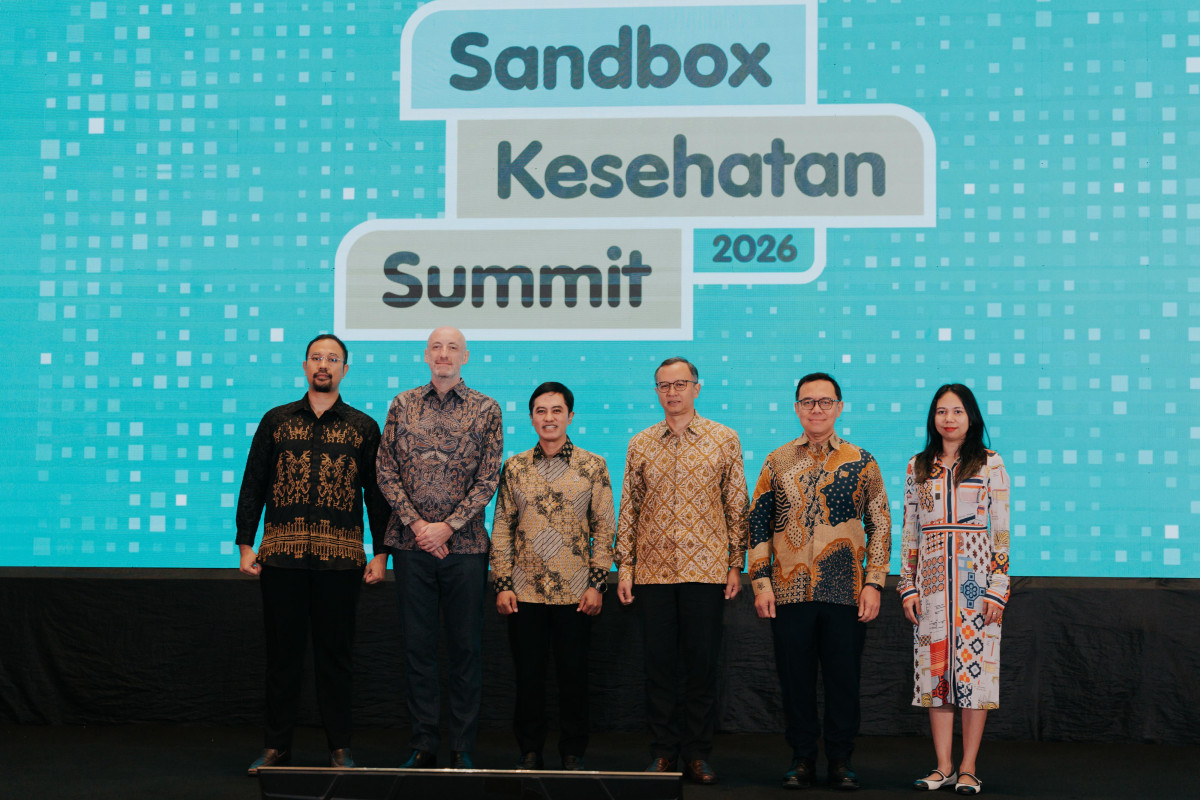
Deputy Minister of Health of Indonesia, Dante Saksono Harbuwono, highlighted the importance of proper regulation to prevent medical technology innovations from endangering patients, enabling data misuse, or widening disparities in healthcare services.
Deputy Minister Dante delivered the remarks at the 2026 Sandbox Kesehatan Summit, organized by the Ministry of Health (MoH) Indonesia in collaboration with the British Embassy in Jakarta through AMANA Solutions on Tuesday (10/11). The event marked the third anniversary of the Sandbox Kesehatan program, presented its achievements and policy recommendations, and introduced the Inclusivity Guidelines for Digital Health Technology.
As part of its contribution to the technology pillar of Indonesia’s Health Transformation Agenda, the program recorded a total of 60 health technology innovations (ITK) undergoing testing between 2023 and 2025. Of these, 39 successfully passed the assessment and received ITK Registration Numbers.
Amid the rapid adoption of health technologies, ranging from artificial intelligence (AI) for detecting lung cancer through X-rays with accuracy exceeding that of radiologists without technological assistance, AI-powered medical scribes that reduce doctors' clinical documentation workload, to applications for monitoring child growth and development, Dante emphasized that the main challenge is not simply accelerating innovation. More importantly, every innovation must be safe, reliable, and deliver tangible benefits to the public.
“Since 2023, Sandbox Kesehatan has provided a safe space for innovators to test their solutions, receive guidance, and obtain recommendations for improvement, guided by three key principles: expanding access, improving quality, and ensuring the safety of healthcare services for all communities,” Deputy Minister Dante emphasized.
Support for the development of the health innovation ecosystem was also expressed by Peter Rajadiston, Minister-Counsellor (Development) to Indonesia, Timor-Leste and ASEAN at the BEJ. He reaffirmed the United Kingdom’s commitment as a strategic partner of MoH Indonesia since 2023 in providing a safe and inclusive testing environment.
According to Peter, the three years of implementing the Regulatory Sandbox have demonstrated that effective partnerships can drive innovation while providing a platform for government learning. This support forms part of the Tangguh partnership, a UK-Indonesia health cooperation platform launched in October 2026 to build a sustainable innovation ecosystem while strengthening bilateral relations between the two countries.
As the program evolved, the scope of Sandbox Kesehatan testing expanded to five clusters in 2024. In 2025, the program further developed into three schemes: Innovation Development (Innovation Sandbox), Expansion of Innovation Utilization (Industrial Sandbox), and Innovation-Based Policy Development (Regulatory Sandbox).
The 2025-2026 implementation period also received support from Pijar Foundation and Health System Insights, together with AMANA Solutions as implementation partners.
Head of the Center for Data and Information Technology (Pusdatin) at MoH Indonesia, Eko Sulistijo, explained that the Regulatory Sandbox serves as a learning platform for the government to formulate adaptive, evidence-based policies.
In its first year, the program generated input for the Draft Minister of Health Regulation (RPMK) on the Implementation of Health Efforts, particularly concerning telehealth and telemedicine. Subsequently, during the 2024 and 2025-2026 periods, the program produced cross-cluster policy recommendations, which have been disseminated to relevant ministries, institutions, and work units. All recommendations are now accessible through sandbox.kemkes.go.id.
“These findings provide an important foundation for us to develop more adaptive policies while ensuring that innovation continues to grow with safety, quality, and public well-being as our top priorities,” Eko said.
Beyond promoting innovation, MoH Indonesia is also strengthening inclusivity in digital health technology development. As a follow-up to the Tangguh+ partnership, MoH Indonesia and the BEJ developed the Inclusivity Guidelines for Digital Health Technology, involving organizations representing persons with disabilities as well as relevant ministries and institutions.
Director of Vulnerable Group Health Services at MoH Indonesia, Imran Pambudi, emphasized that inclusivity principles must be incorporated from the development through the testing stages. This will help ensure that digital health technologies in Indonesia are accessible to all segments of society, including persons with disabilities.
In addition to highlighting achievements and policy recommendations, the Sandbox Kesehatan Summit 2026 also featured experience-sharing sessions with program participants and a matchmaking session connecting innovators with investors to support business sustainability beyond the testing phase.
AMANA Solutions Health Partner, Nya’ Zata Amani, stated that the session facilitated collaboration among innovators, investors, and ecosystem partners to help health innovations continue to grow and deliver tangible impact.
In response to growing interest from innovators, MoH Indonesia plans to open registration for the 2027 Sandbox Kesehatan program earlier, in late 2026, through sandbox.kemkes.go.id.
This press release is syndicated from the Bureau of Communication and Public Information under the title “Tiga Tahun Sandbox Kesehatan, Kemenkes Perkuat Inovasi Digital yang Aman dan Inklusif” and republished by the Center for Data and Information Technology - Health Technology Transformation and Digitalization Team (Pusdatin-TTDK), Ministry of Health of the Republic of Indonesia.
For further information, please contact Halo Kemenkes through hotline 1500-567, WhatsApp chatbot +62 811-10-500-567, or email [email protected].