 English
 Indonesia

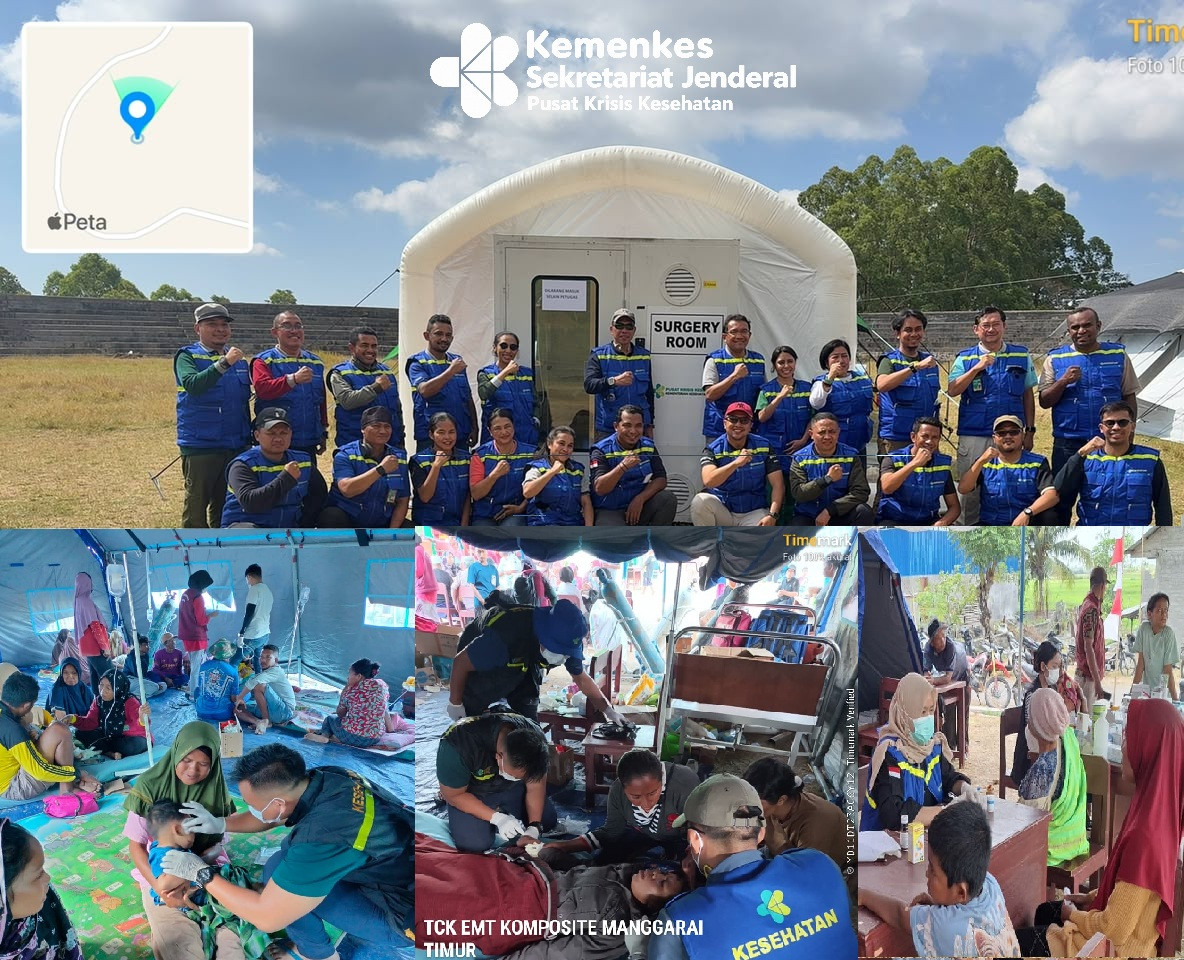
The magnitude 7.7 earthquake that struck the Flores region of East Nusa Tenggara (NTT) on August 15, 2026, left a deep scar on local communities. In addition to claiming lives and forcing thousands of residents to evacuate, the disaster also disrupted a number of health facilities that should have served as the first point of care for affected communities. Amid the critical situation, the Ministry of Health of the Republic of Indonesia (Kemenkes RI) moved swiftly by deploying Health Emergency Reserve Personnel-Emergency Medical Teams (TCK-EMT) to several locations across a number of affected districts.
TCK-EMT is a medical response team prepared by the Ministry of Health to respond to health emergencies, ranging from natural disasters to disease outbreaks. In a crisis such as the Flores earthquake, their presence serves as an essential support for temporarily disrupted health services while ensuring that injured and displaced residents continue to have access to medical care.
East Manggarai: Two Teams Deployed to Pota and Welang Community Health Centers
In East Manggarai Regency, the Ministry of Health deployed two Mobile TCK-EMT teams. Each team consists of one doctor, two nurses, one pharmacy personnel, and one health administration/logistics officer. The two teams were stationed at health posts within the service areas of Pota Community Health Center and Welang Community Health Center, providing basic health services to residents in the surrounding areas.
Sikka: Supporting Displaced Residents at Gelora Samador
One Mobile TCK-EMT team with the same personnel composition was also deployed to Sikka Regency. The team is assigned to the health post at the Gelora Samador evacuation site, where residents affected by the earthquake have sought refuge.
The presence of healthcare workers at evacuation sites is crucial, as living in temporary shelters can increase the risk of new health problems, ranging from infectious diseases to health issues caused by exhaustion and psychological stress following the disaster.
Nagekeo: Strengthening Aeramo Regional Hospital and Activating the HEOC
In Nagekeo Regency, one of the areas closest to the earthquake's epicenter, the Ministry of Health deployed a Composite TCK-EMT team. The team supports healthcare services at Aeramo Regional Hospital while also activating the Health Emergency Operation Center (HEOC) at the Nagekeo District Health Office.
The activation of the HEOC is essential as a command center for coordinating the overall emergency health response in the area, including the deployment of medical personnel, distribution of medicines and medical supplies, and the collection and coordination of information on needs in the field.
Manggarai: Supporting the Field Hospital and Ruteng Regional Hospital
Manggarai Regency also received one Composite TCK-EMT team. In addition to providing healthcare services at the Field Hospital established to accommodate patients amid limited permanent healthcare capacity, the team also supports healthcare services at Ruteng Regional Hospital and several Community Health Centers affected by the earthquake.
Synergy for the Recovery of Health Services
The deployment of TCK-EMT teams to these four regencies demonstrates the Ministry of Health's efforts to be present in the areas most in need, ranging from small community health centers in remote areas and health posts at evacuation sites to referral hospitals serving as the main source of healthcare for affected communities.
Each team works not only with medical expertise but also with the readiness to operate under challenging field conditions, including partially restored electricity, disrupted road access, and ongoing aftershocks.
This effort is part of the Ministry of Health's ongoing and tireless commitment to ensuring that no one affected by the earthquake in NTT is left without access to adequate healthcare services. Amid the rubble and grief that still linger, TCK-EMT healthcare workers continue to move forward, providing care and accompanying the people of NTT on their journey toward recovery.